collection
ACCESSORIES
Journal
about


View account

Sign out


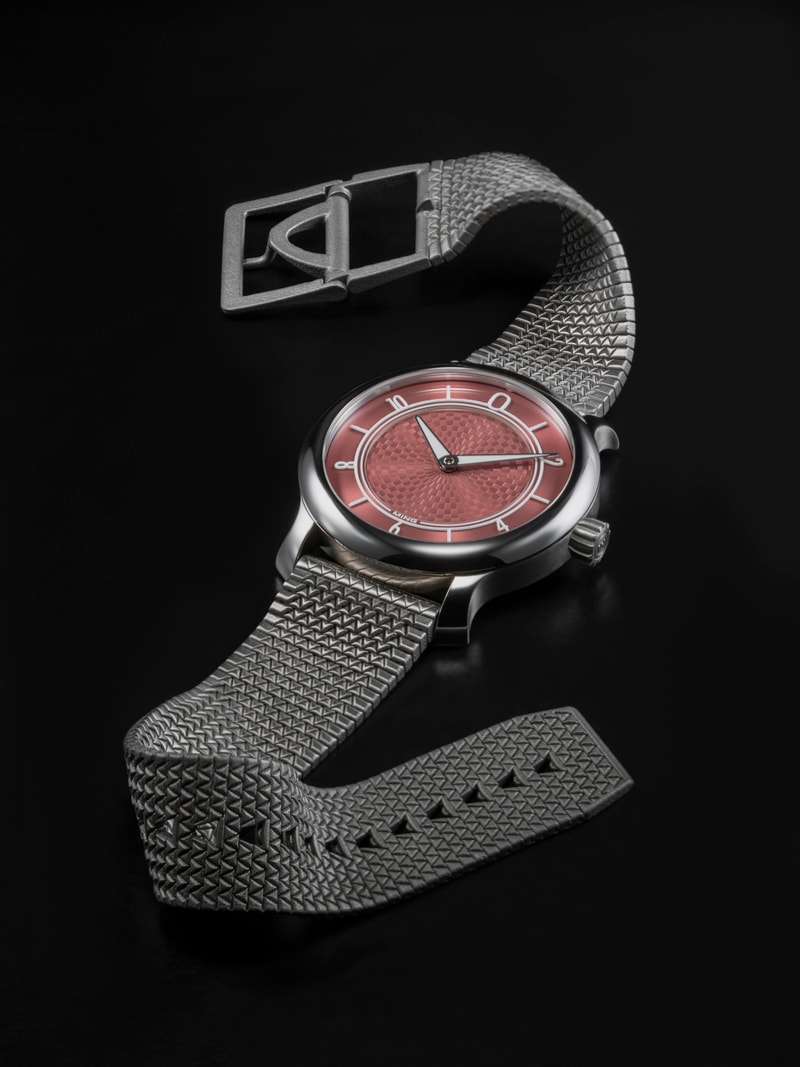
The easiest way to understand the MING Polymesh is by holding it.
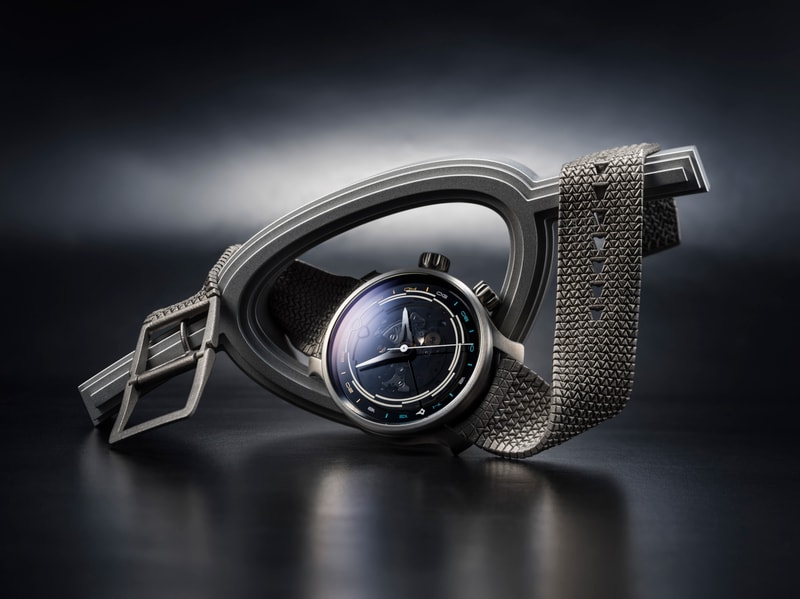
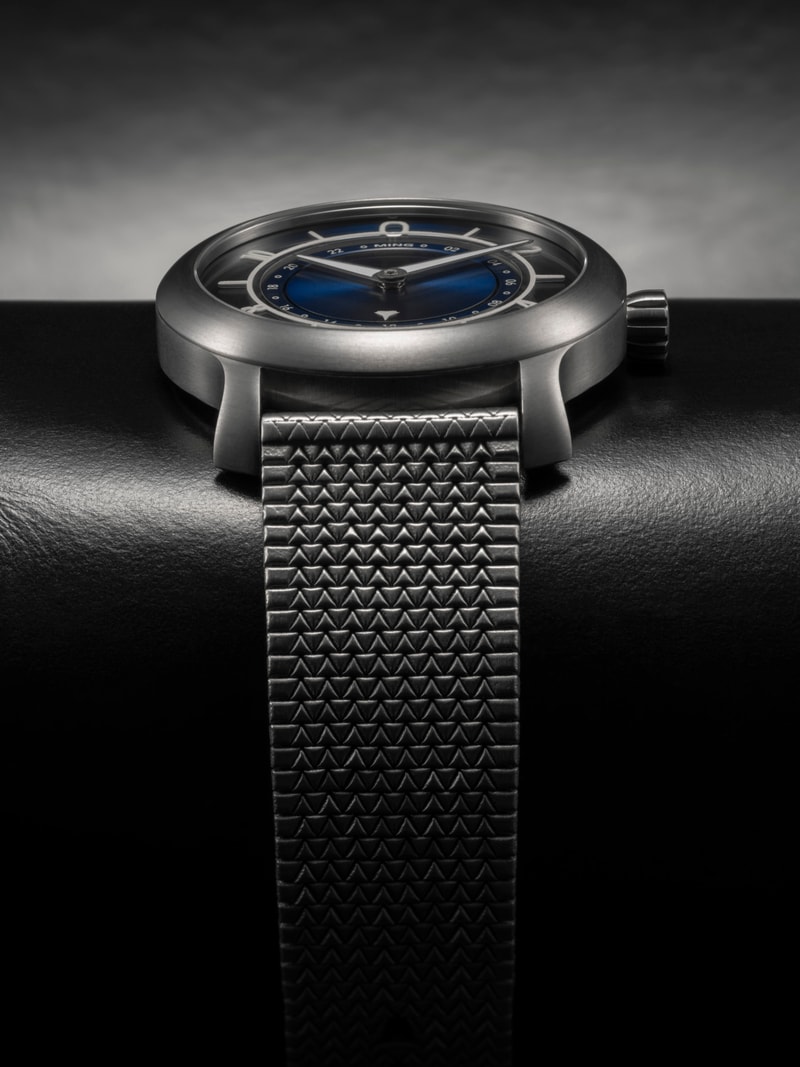
At first glance, the Polymesh may resemble a conventional mesh bracelet, but as soon as you pick it up or strap it on, it becomes clear that it behaves very differently. The structure flexes and flows with the softness of fabric, despite being made entirely from grade-5 titanium.
That's because the Polymesh is something new – a design that straddles the boundaries of familiar categories like bracelets and straps. In combining the strength and tactility of metal with the comfort of cloth, it represents something unique: the world's first 3D-printed titanium bracelet-strap hybrid.
With the introduction of the Polymesh – Straight in April 2026, the concept expands even further. Now, the Polymesh can be adapted to watches beyond the MING catalogue for the first time.
But the real story behind the Polymesh is not solely about comfort or compatibility. It is about how advances in manufacturing technology can enable entirely new forms of design.

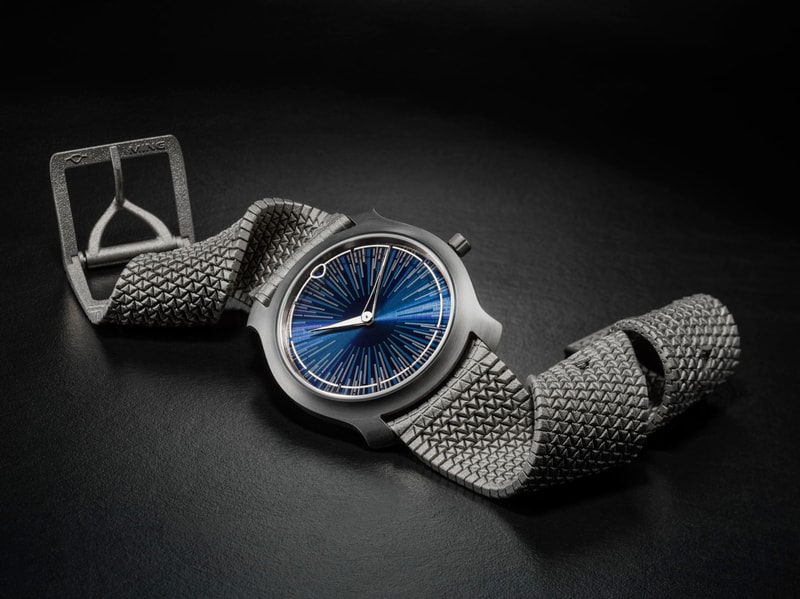
Traditional watch bracelets are assembled from individual links connected by pins or screws. Even the most refined examples follow this basic principle: separate components produced individually, then assembled.
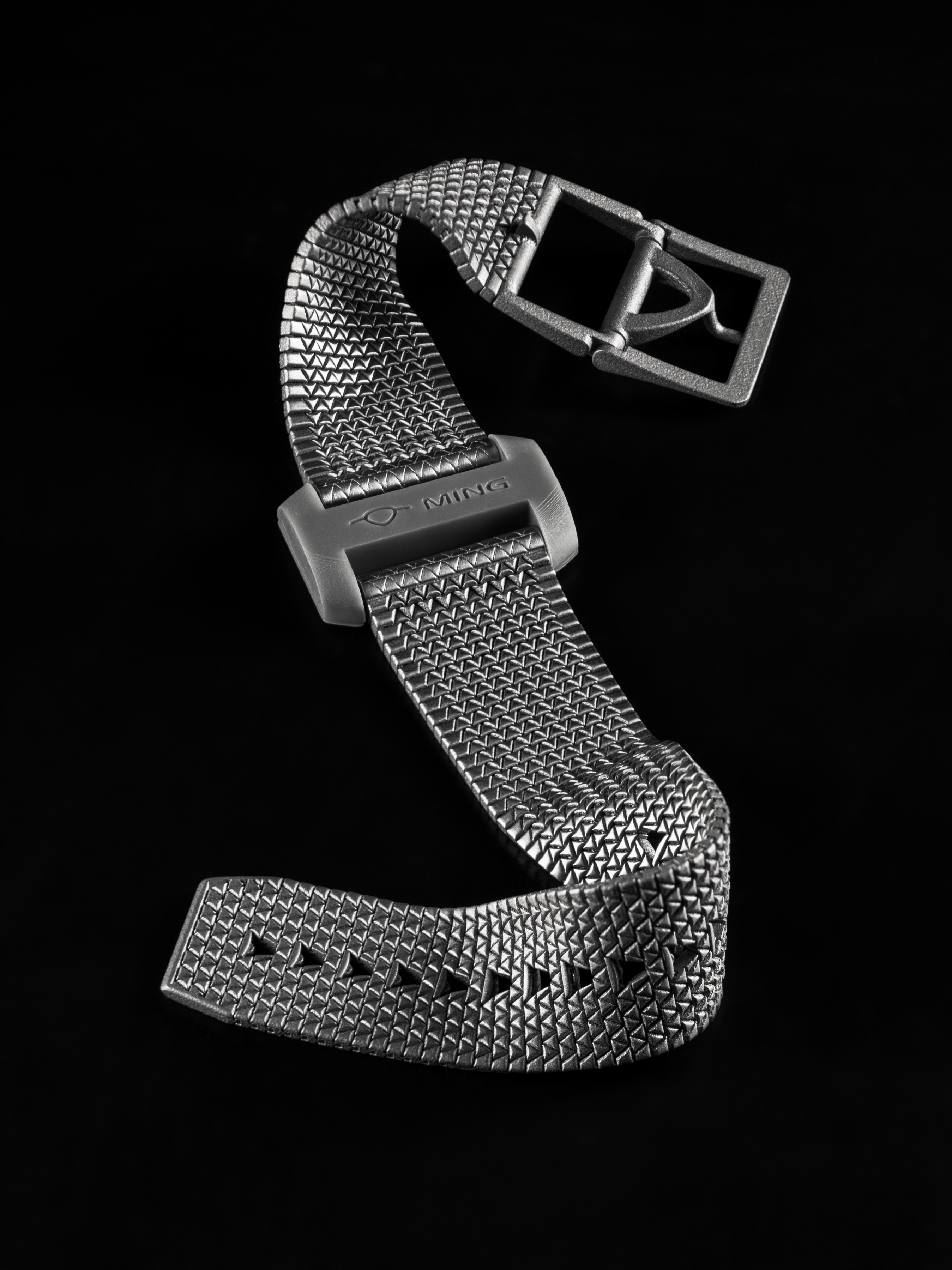
The Polymesh takes a radically different approach. Instead of machining each link individually, the entire bracelet is printed in a continuous, articulated format. Each Polymesh contains around 1,700 interconnected elements (to be precise, 1,693 in the curved design; 1,742 in the straight version), all created simultaneously during the manufacturing process.
These tiny elements hook into one another in a continuous closed-loop topology. There are no screws, no pins, and no assembly at all. Even our signature integrated tuck buckle and its articulated tang hinge are formed at the same time and are not separate items.
The only components added later are the quick-release 20mm spring bars.
Developing the Polymesh initially took roughly one year. During that time, it underwent seven complete redesigns and optimizations before arriving at its final form. Throughout this process, Ming Thein (MT) used 5:1 scale plastic prototypes produced by 3D printing to study and refine how the structure moved and articulated, allowing the flow characteristics of each iteration to be evaluated.
A key objective in the Polymesh’s development was understanding how the entire structure would move. Unlike a conventional metal bracelet, the Polymesh has more motion engineered into its radial axis than its lateral one, allowing it to wrap naturally around the wrist while still supporting the watch head securely. One advantage of this approach was that the degree of movement could be tuned locally: by precisely controlling the clearances between individual elements, the articulation of different sections of the bracelet was considered and defined during the design stage.
Such a design would have been impossible to implement using traditional machining techniques. Instead, it was produced using a process called Direct Metal Laster Sintering (DMLS), which falls under the broader category of additive manufacturing. Essentially, this technique involves the fusion of successive layers of ultra-fine titanium powder with lasers until the bracelet gradually takes shape.
While “3D printing” has become a familiar term, the technique used for the MING Polymesh differs significantly from the plastic filament printers most people associate with the technology.
The process begins with an extremely fine titanium powder. The machine spreads a distinctively defined thin layer of this powder across the build platform, creating a perfectly even surface.
A high-powered laser then moves across the layer, selectively sintering the titanium particles together according to predetermined patterns to create the required layer.
After one layer is complete, a new layer of powder is applied and the process repeats.
Layer by layer, the bracelet structure gradually emerges, with each Polymesh requiring over a thousand individual layers to complete.
Of course, working with titanium powder carries certain risks. Powder-size titanium is highly reactive with oxygen because it provides a massive surface area for rapid oxidation, which means it can be explosive in the wrong conditions (sometimes static energy suffices) and requires special handling. For this reason, the whole printing process is carried out in a special inert atmosphere chamber where titanium particles are sintered into the required shapes.
This also requires that, during manufacturing, heat buildup needs be properly managed. Parameters such as laser intensity and influx angle, speed, layer thickness, and many more need be carefully balanced to constrain heat production, maintain precise tolerances (which are so important for the tactility of the Polymesh), and still retain an acceptably efficient production process.
Still, the entire process takes many hours, with about half a dozen bracelets typically printed simultaneously in a single build cycle.
To realize the Polymesh, we partnered with Sisma S.p.A. in Italy and ProMotion SA in Switzerland for prototyping and manufacturing.
.jpg)
.jpg)
One of the primary challenges in producing the MING Polymesh lies in controlling the minuscule clearances between the many moving elements.
The tiny links must remain separate so they can articulate freely, yet the gaps between them must remain microscopic to maintain structural integrity.
In some areas, the tolerances can be as tight as 30 microns – slimmer than a single human hair.
If the gaps are too narrow, adjacent elements can fuse together during the sintering process. If they are too wide, the bracelet loses its intended fluidity.
Achieving the correct balance required extensive experimentation. Even small variations in particle placement within the titanium powder can occasionally produce surface artifacts that must be corrected or rejected.
“It shows that even though this is additive manufacturing, it is not a straightforward process,” Dr. Bosse, Head of Research & Information at Horologer MING, explains after having observed the process firsthand. “There is a lot of iteration and optimization required to get the parameters exactly right, and it takes an immense amount of experience and knowledge on the side of the experts who set up and run the DMLS process.”
Once the printing process is complete, the Polymesh still requires careful finishing.
The bracelet undergoes surface finishing to eliminate layer lines and microscopic burrs left by the manufacturing process, all to ensure that the bracelet articulates smoothly and feels soft on the wrist while retaining secure fit.
Despite its fluid design, the finished structure is remarkably strong. Laboratory testing revealed the Polymesh is capable of withstanding nearly 1,000 newtons of tensile force, with the spring bars failing before the bracelet itself in destructive tests.
The result is a structure that behaves differently from both bracelets and straps. The Polymesh’s extremely small links allow it to conform naturally to the wrist, while the grade-5 titanium construction retains the tactile presence and durability of metal.
It creates a new kind of sensation – that of something both soft and sturdy at the same time.
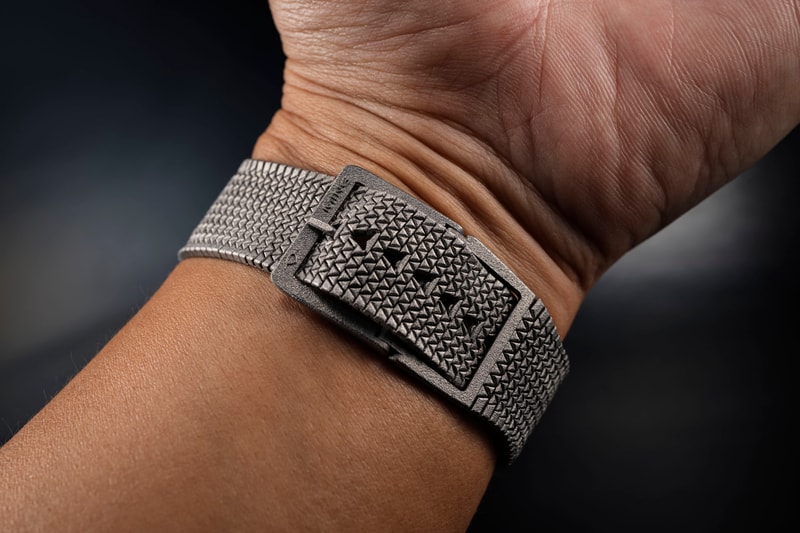
The debut version of the Polymesh was designed specifically for MING watches, using curved spring bars to integrate seamlessly with our traditional case and lug architecture.
However, the strong response from collectors quickly raised an obvious question – could the Polymesh be worn on other watches?
With the all-new Polymesh – Straight, the answer is yes.
By replacing the curved spring bars with conventional straight 20mm spring bars, the Polymesh can now be fitted to a wide range of watches beyond the MING ecosystem.
In doing so, it represents an unusual step for us: this is the first MING product designed primarily for watches we did not make.
For over a century, wristwatch bracelets have evolved through refinement: better craftsmanship or machining, improved finishing, and more precise tolerances.
The Polymesh demonstrates a different approach. Not by improving the old designs directly but by creating an entirely new topology through novel manufacturing methods.
What began as a technical experiment has become something more tangible: a bracelet that behaves like a strap, a strap with the tactility of metal – and an example of how curiosity, more than tradition, often drives watchmaking forward.
Thank you to Dr. Magnus Bosse for his knowledge and guidance while working on this story.