collection
ACCESSORIES
Journal
about


View account

Sign out


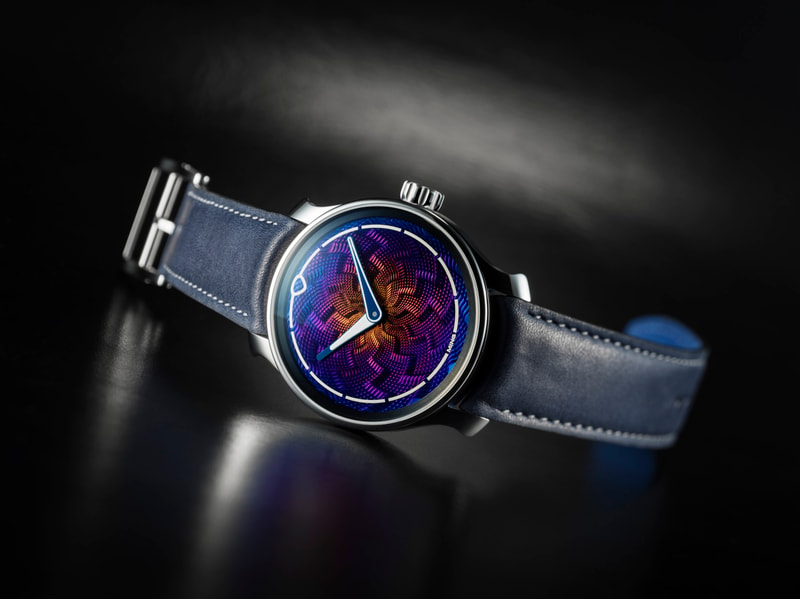
The new 37.06 Lightning is the result of two independent makers doing what independent makers tend to do best: making life more difficult for themselves in pursuit of something more interesting.
It’s our first complete watch with J.N. Shapiro, though not our first project together. We have worked with Josh Shapiro and his team before through the Alternative Horological Alliance (AHA), including the AHA tantalum bracelet and the cases for the MING Project 21 series. But those were different kinds of collaborations. The 37.06 Lightning is the first watch designed and built through direct collaboration between Ming Thein and Josh Shapiro.
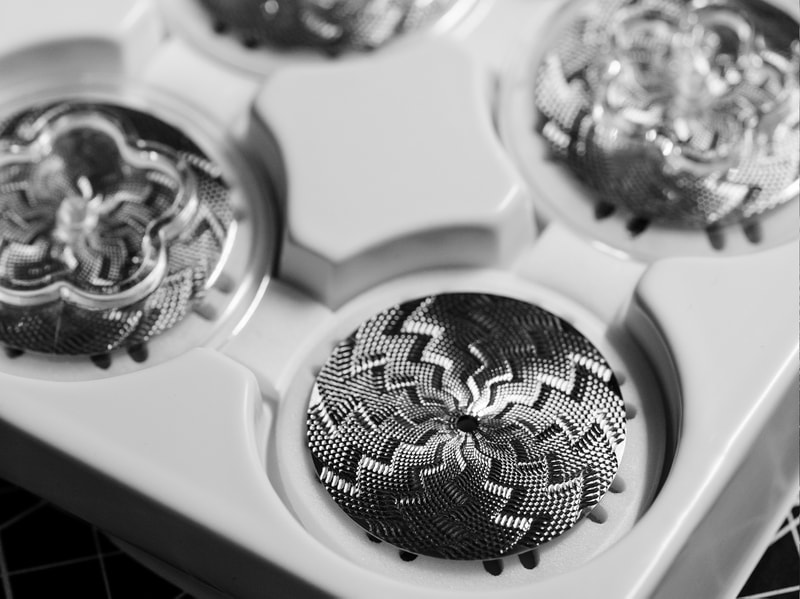
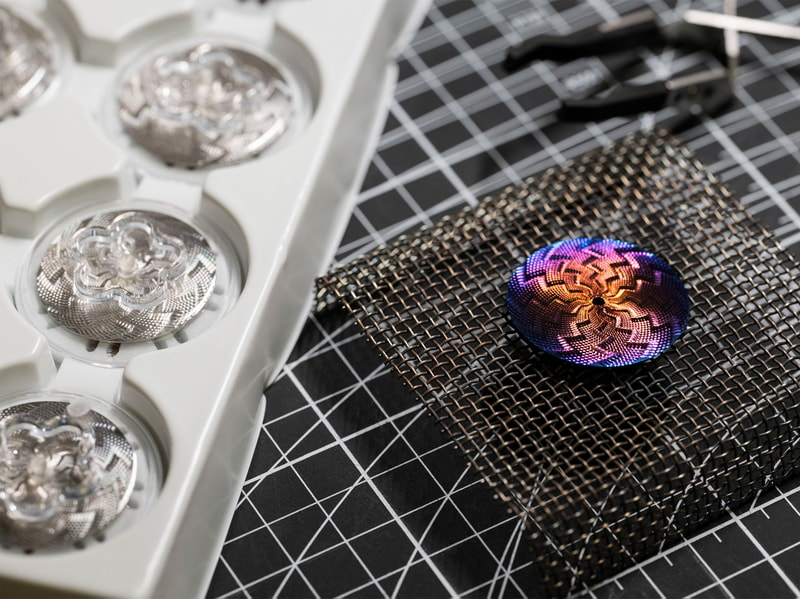
Each Lightning dial begins in Los Angeles at the J.N. Shapiro workshop. The base material is grade-2 “pure” titanium, individually engine-turned by hand on a traditional rose-engine lathe. The pattern is called “Lightning guilloché,” and this is the first time Josh has used it on a wristwatch.
Traditional guilloché can sometimes feel formal, almost architectural. The Lightning pattern feels less restrained. It has movement, and it is a little harder to pin down. The engraved lines seem to shift as light moves across the dial, which gives us a perfect canvas for the next stage: making things even less predictable.

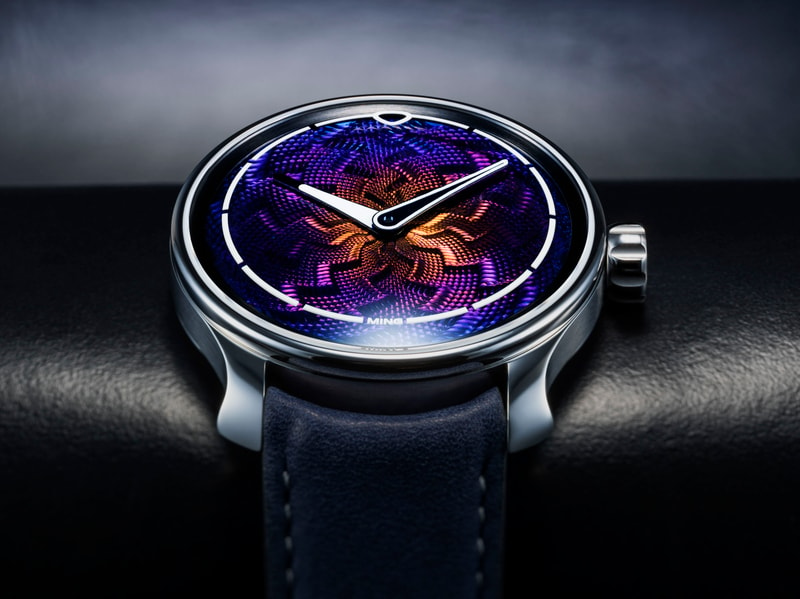
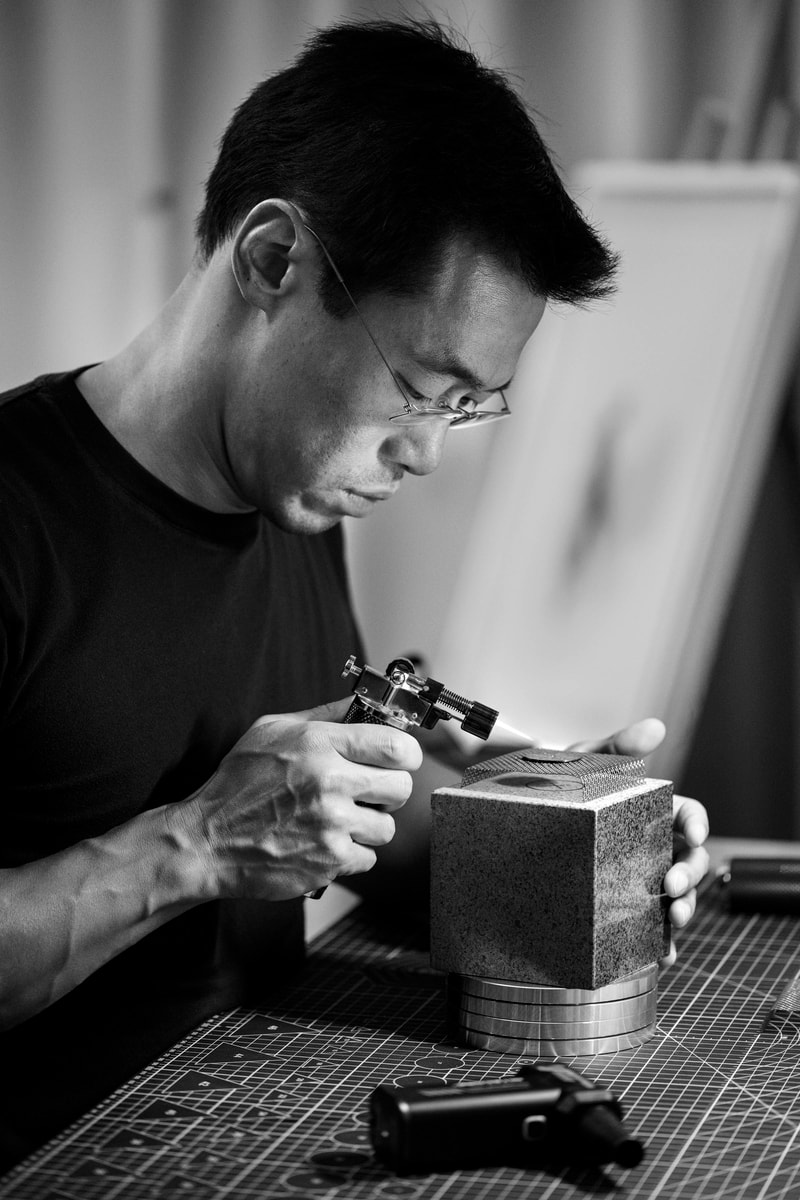
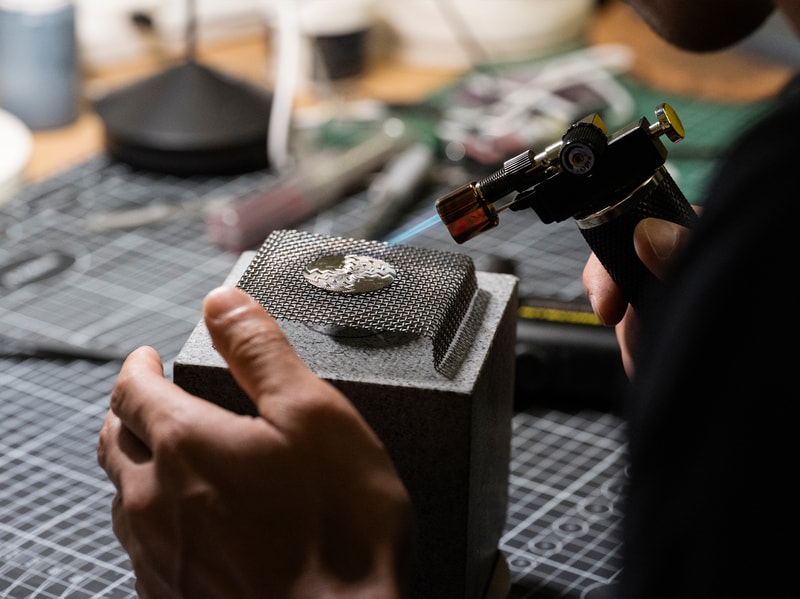
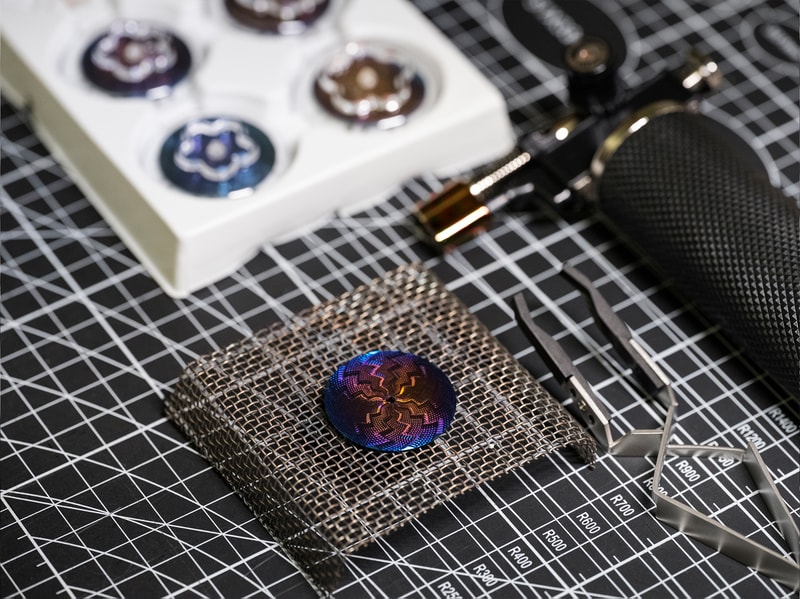
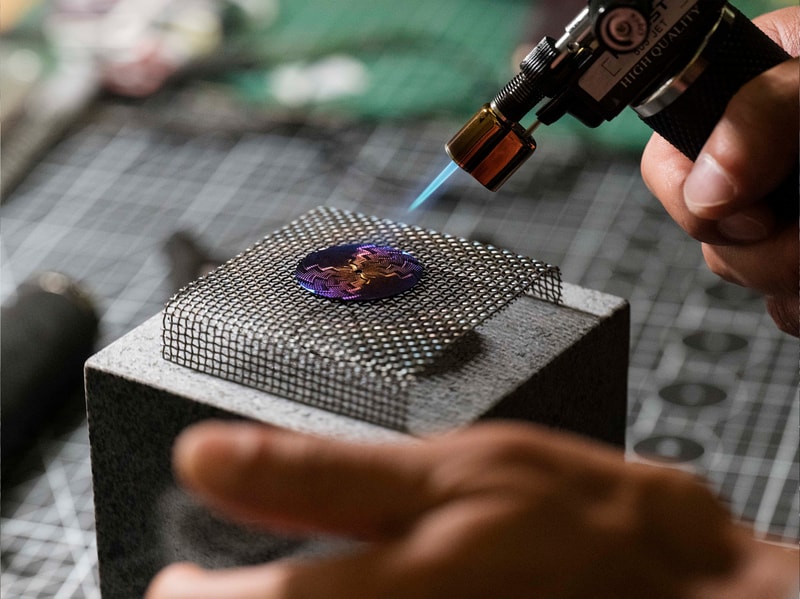
After the engine-turning is complete, the dials travel from Los Angeles to Kuala Lumpur. There, Ming Thein heat-colors each one by hand with a butane torch.
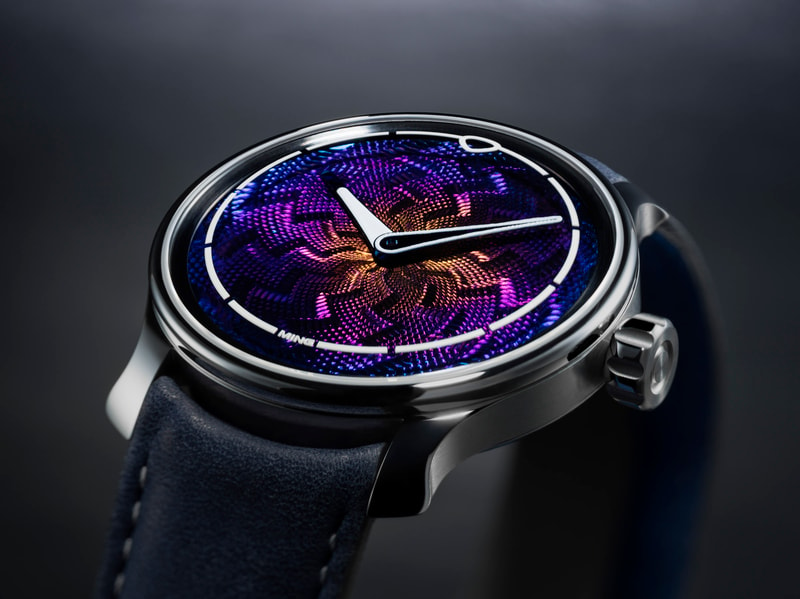
There is no paint, lacquer, PVD, chemical, or otherwise colored finish applied during this process. The color comes from heat acting on the titanium itself. With the right temperature, timing, and touch, the metal develops a surface oxide layer that creates color. In this case, that means deep blue, purple, and orange-yellow, spread across the guilloché in a way that looks different on every dial.
It sounds simple until you try to do it.
There is virtually no room for error during heat coloring. A few seconds too long with the torch, and the dial is toast. Too little heat, and the color won’t develop properly. Even if the torch work is good, the earlier guilloché can expose tiny variations in the titanium’s structure, and those variations can affect the final color. In other words, the dial can make it through one difficult process and still fail in the next one.
Only about one in three dials survives the full process.
The high cost of this level of wastage would make any rational person cry in frustration. However, it is also the reason why each Lightning dial looks the way it does. Every successful dial has passed through two separate hand processes, each with its own risks, and each finished dial carries the evidence of both.
Josh and his team turned the texture. Ming adds the color. One cannot be separated from the other.
The result is not “unique” in a typical vague horological sense. The dials are genuinely different from each other. Some are darker. Some are more electric. Some lean harder into blue and purple, while others show more orange and yellow. Each dial has the same underlying guilloché structure, but the resulting final effect changes from watch to watch because, after all, lightning never strikes twice.
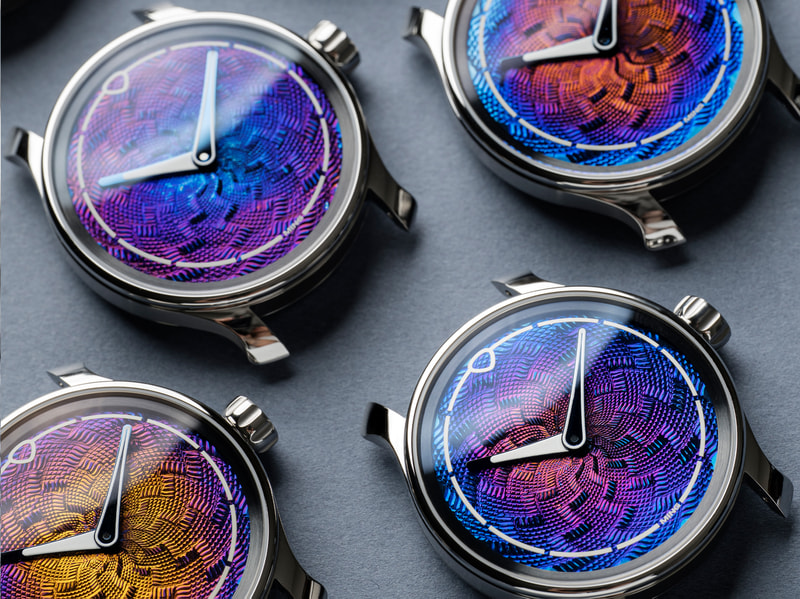
The case is our familiar 37-series architecture, here in 316L stainless steel. It measures 38mm in diameter, 10.9mm in height, and 44.5mm lug-to-lug, with a 20mm lug width.
The narrow bezel gives the dial as much room as possible to breathe without affecting overall size. The domed front sapphire crystal opens the surface visually, while the sculpted lugs keep the watch compact on the wrist. As with our other 37-series watches, the case silhouette looks straightforward at a glance, but it requires multi-axis machining to achieve the final shape.
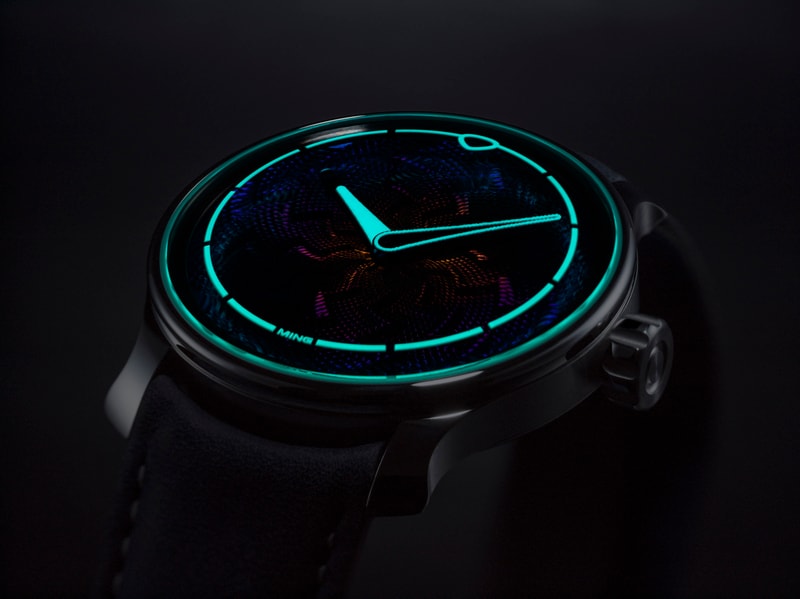
The front crystal also carries one of our favorite details. The sapphire is laser-hollowed and filled with luminous HyCeram to create the indices. This keeps the dial itself clean, with no printed hour markers interrupting the guilloché or heat color. It also enables our signature sense of depth, with the indices floating above the dial rather than sitting on top of it.
The hands are treated with multiple applications of Super-LumiNova X1 for an even glow, while the non-luminous portions are anodized blue to complement the dial below. There is no seconds hand. We considered the dial busy enough without adding a small moving reminder that time is passing and emails remain unanswered.
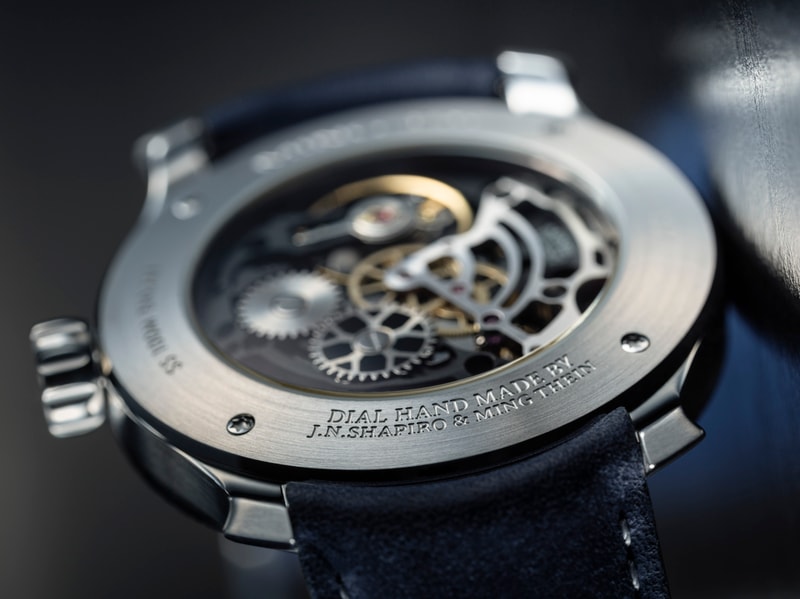
Inside is the Sellita for MING calibre SW210.M1, a manual-wind movement made in a MING-exclusive configuration. It features skeletonized, rhodium-plated bridges, an anthracite-coated baseplate, and approximately 42 hours of power reserve. The movement is visible through the domed sapphire caseback, engraved underneath with “DIAL HAND MADE BY J.N. SHAPIRO & MING THEIN.” The watch also offers 100 meters of water resistance.
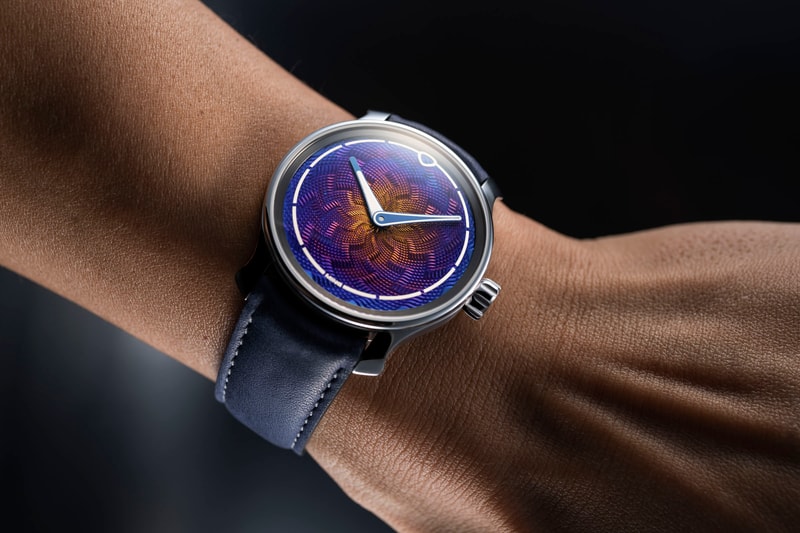
The Lightning comes on a blue Barenia calfskin strap with Alcantara lining from Jean Rousseau, fitted with curved quick-release spring bars and our flying-blade tuck buckle with micro-adjustment.
Production will be limited by the complexity of the dial manufacturing. A limited initial quantity will be available when orders open on Friday, 5 June, at 1:00 PM GMT. From July 2026 onward, we expect to produce approximately 10 examples per month, depending on dial yield.
The 37.06 Lightning is not the most complicated watch we have made. It is not our thinnest, lightest, or strangest, either. But it is one of our most personal.
Josh Shapiro gives the dial its texture. Ming Thein gives it its color and character. The 37-series case gives it a familiar MING frame. The result feels like something that could only come from their friendship. It is a watch that celebrates texture, color, light, and risk. It is also a reminder that independent watchmaking is often at its best when it accepts a little uncertainty.
Or, in this case, quite a lot of it.